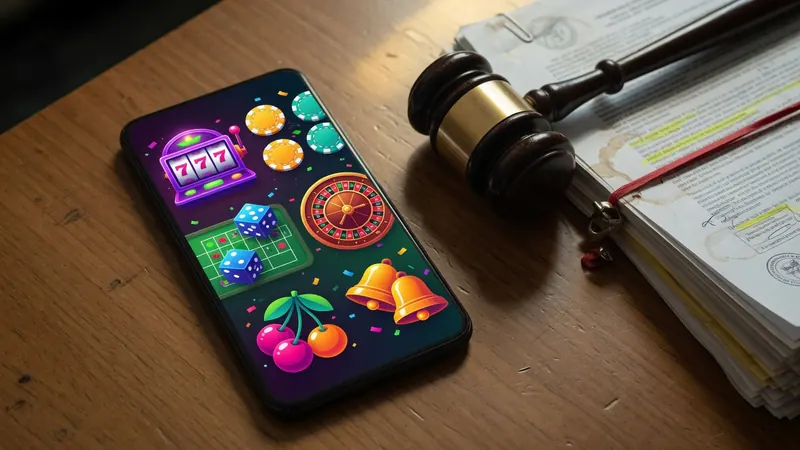
Pennsylvania House Bill 2801 would make it illegal to run, promote, or help operate online sweepstakes casino games that use a dual-currency system, with proposed penalties of $50,000 to $500,000 for each violation. The measure, sponsored by Rep. Russ Diamond and sent to the House Gaming Oversight Committee on September 24, would also expand investigative and enforcement powers for the Pennsylvania Gaming Control Board and the attorney general. No committee votes or hearings had been recorded as of the latest available bill information.
What the Bill Prohibits
The proposal would insert a new section into Title 4 of the Pennsylvania Consolidated Statutes. It would bar any person or entity from operating, conducting, or promoting online sweepstakes games, and it would also prohibit actions that support or help administer, run, or promote those games. That broader language could extend to vendors and other service providers, not just operators, according to RG.org.
The bill defines an online sweepstakes game as a web or mobile offering that uses two currencies, one of which can be exchanged for cash, a prize, or a chance to receive either, and that imitates casino-style gambling. Covered formats include slots; table games such as blackjack, roulette, craps, and poker; lottery-style games like keno and bingo; instant win titles; and sports wagering. Games that offer no cash prizes or cash equivalents are excluded, leaving room for coin-only social casinos where purchased coins cannot be redeemed.
Penalties and License Consequences
Under the bill text, each violation would carry a fine of no less than $50,000 and no more than $500,000. A violator would also face revocation of any gaming license and would be barred from obtaining a new one. Covers reported that the proposed sanctions would apply to operators and to anyone who assists in running the prohibited games.
Expanded Enforcement Authority
The Gaming Control Board could investigate, hold hearings, and use subpoenas and cease-and-desist orders to enforce the new section. The attorney general would have the ability to pursue alleged violations independently or in coordination with the board, using the same tools. The added authority follows the board's earlier concerns: at an April 2025 committee hearing, PGCB Chief Counsel Steve Cook said the regulator's reach was limited over companies outside its oversight, and Chief Enforcement Counsel Cyrus Pitre said 18 cease-and-desist notices had been sent to sweepstakes platforms. All recipients complied, but new operators kept entering the market.
Sweepstakes Plan Is Part of a Larger Gaming Package
Diamond's co-sponsorship memo, titled "Skill Games & Gaming Modernization," describes a broader package that would regulate and tax skill game machines. It would allow up to five devices in clubs, bars, restaurants, and qualified truck stops, with a 20% tax on gross terminal revenue. The memo also proposes lowering the tax on casino slot machines to 49.9% and setting the same rate for all online casino games. Gaming tax revenue would go into the State Gaming Fund and then be distributed as follows: 6.75% to the Race Horse Development Trust Fund, 1% to the Compulsive and Problem Gambling Treatment Fund, 79% to the Property Tax Relief Fund, and 13.25% to the General Fund. A companion bill, HB 2802, would provide property tax relief through a direct annual gaming dividend to eligible homeowners.
The bill's title also covers changes to fantasy contest and sports wagering provisions. The sweepstakes language comes after a June state Supreme Court ruling that unregulated skill games are slot machines, and Pennsylvania State Police were scheduled to begin skill game seizures on October 14.
Where Pennsylvania Fits in the Sweepstakes Debate
Pennsylvania is among several states now weighing the dual-currency model. Wyoming lawmakers are discussing whether to ban or regulate the products, and Virginia legislation could return in 2027 after the issue was sent to study. In states that have already acted, single-currency operators have entered with one-coin models that the dual-currency definitions do not describe, according to RG.org.